

Procedural generation layers using Perlin noise to stitch zones without loading screens. Optimized for Turkish ISPs with local peering nodes.
- Server Logic Spatial Partitioning
- World Scale 1200 sq km (Seamless)
- Concurrency 12,000 / Instance
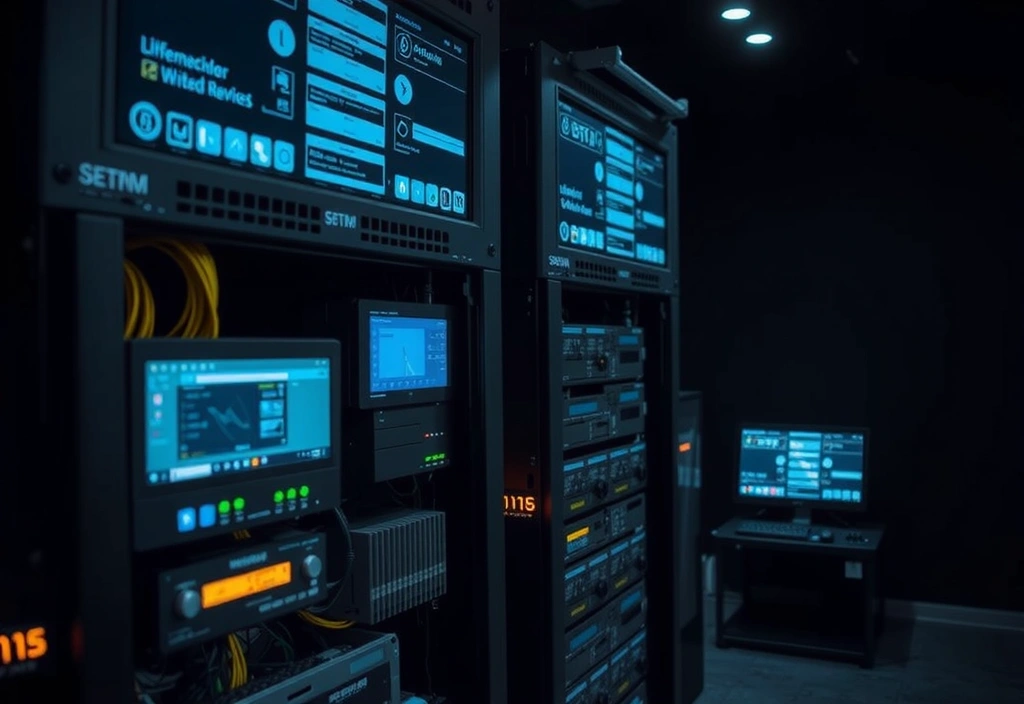
DataViox builds gaming software where technical constraints dictate aesthetic outcomes. This catalog details our current production builds, server-side architectures, and the custom engines powering the next era of competitive play.
SYSTEM_NOTICE: Performance metrics are based on TurkNet/Superonline fiber backbones. Actual latency may vary by local ISP node congestion levels. Grayscale filtering applied to all viewport previews for visual consistency.
Rendering: Forward-Plus / 120-Tick Refresh Rate / Sub-10ms Input Latency
In competitive FPS environments, time is the only currency that matters. Chrono-Shift introduces a proprietary 'Rollback Netcode' system that reconciles client-side actions with server reality in real-time. Unlike standard shooters that wait for server confirmation (causing 'ghosting'), Chrono-Shift predicts movements locally and rolls back only when a discrepancy occurs.
The engine utilizes a forward-plus renderer specifically designed to handle transparency-heavy effects—smoke, debris, and time-dilation fields—without dropping the frame rate of the local viewport. This ensures that tactical clarity remains high even during intense firefights on Istanbul central servers.
Temporal Prediction Buffer
Rollback UDP / 120Hz Tick
Procedural generation layers using Perlin noise to stitch zones without loading screens. Optimized for Turkish ISPs with local peering nodes.
Physics-based mobile racing utilizing a custom rigid-body solver. Optimized for Vulkan API to reduce thermal throttling on mid-tier hardware.
Real-time tactical warfare featuring flocking algorithms and hierarchical A* pathfinding. Maintains competitive integrity under lag.
Benefit: Prioritizing 120Hz refresh targets ensures competitive fairness.
Mitigation: We use advanced vertex shading to maintain perceived quality while reducing polygon weight.
Benefit: Istanbul-centralized clusters minimize internal TurkNet-to-Superonline routing hops.
Mitigation: Redundant nodes in Ankara and Izmir for failover and heat distribution during peak GMT+3 hours.
Benefit: Heavy E2EE protects player inventory and micro-transactions from local sniffing.
Mitigation: Custom UDP-based handshake headers that encrypt only the payload, keeping metadata lightning fast.
Network proximity to Turkish Tier-1 backbones (TurkNet / TTNET / Sol).
Mobile-first asset optimization targeting mid-range hardware common in MENA market.
Database query latency for inventory retrieval (sub-40ms threshold).
Our application development cycle is grounded in the reality of the regional internet landscape. In Turkey, mobile-first data consumption remains the dominant channel for casual gaming, requiring aggressive data-stripping and delta-compression of game updates. We assume a 2G/3G baseline for basic connectivity sync, ensuring that even under severe network throttling, the game state remains validated.
We would significantly pivot our architecture only if subsea cable deployments in the Mediterranean dramatically reduced peering times to Central Europe (Frankfurt/London), allowing us to offload heavy server computations that we currently maintain in Turkey for latency reasons.
"Scaling a multiplayer backend for 500k concurrent users in the MENA region isn't just a coding challenge—it's an infrastructure war against packet loss. DataViox builds the armor for your game's data."— Chief Architect, Cloud Infrastructure (Istanbul Node)
Our data indicates that lower latency (RTT) provides a higher correlation with long-term player retention than high-end visual shaders. While we deliver both, our builds prioritize the network layer as the absolute foundation of the product.
Access our SDK or license specific application modules.
APP_CAT_02.X
MON-FRI: 9:00-18:00
Şişli, Istanbul, Turkey
System Optimal (2026)